
Your Surgeon
Dr. Shah-Naz Khan
MD, FRCSC, FAANS
Founder of the Institute of General and Endovascular Neurosurgery, and a neurosurgeon fellowship-trained in cerebrovascular surgery, endovascular technique and neurotrauma. Every case at this practice is evaluated by her directly.
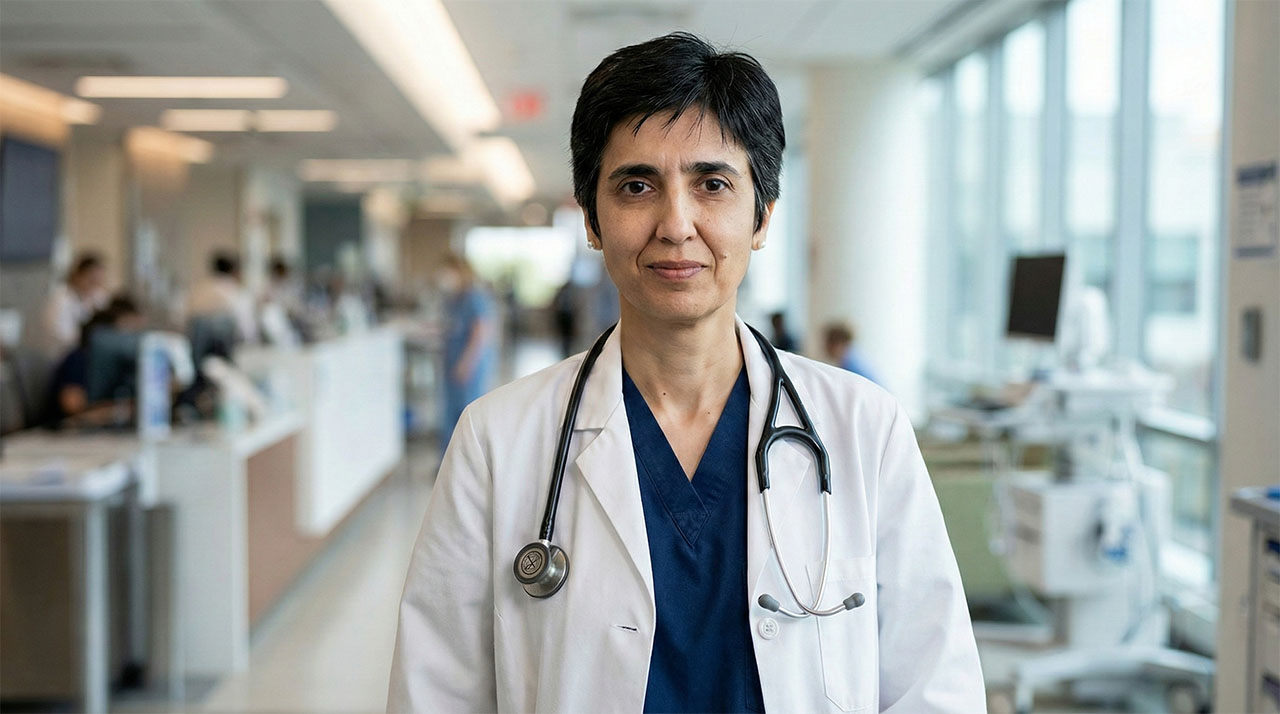
If nobody referred you, her record is what you have to go on
Most people meet a neurosurgeon because another doctor sent them, and they take the introduction on trust. If you have come here on your own, you do not have that. So this page sets out where Dr. Khan trained, what she treats, how she decides, and where you can check all of it independently.
This is a single-surgeon practice. Your case is evaluated by Dr. Khan rather than delegated, and the person who assesses you is the person who would operate.
Training
Her path runs through Pakistan, Canada and the United States, and ends in Michigan. She founded the Institute of General and Endovascular Neurosurgery in Flint in 2014.
- Sinai Hospital, DetroitEarly training in the United States after moving from Pakistan to pursue neurosurgery.
- Neurosurgery residency under Dr. R. GriebelFull residency training in neurological surgery.
- Stroke research, Saskatchewan, CanadaResearch work in stroke, alongside her Canadian surgical fellowship.
- Neurosurgery fellowship, New York UniversitySubspecialty fellowship training at NYU.
- Subspecialisation in neurotrauma, University of ConnecticutDedicated training in traumatic injury to the brain and nervous system.
- Cerebrovascular and endovascular fellowship, Mayfield Clinic, University of CincinnatiTraining in both open cerebrovascular surgery and catheter-based endovascular technique.
What she treats
Cerebrovascular conditions
Stroke, brain aneurysms, and complex conditions of the blood vessels of the brain and spine.
Endovascular treatment
Minimally invasive, catheter-based treatment reaching the problem through the blood vessels.
Brain tumours
Benign and malignant tumours of the brain, assessed with attention to function as well as removal.
Neurotrauma
Head and spinal injuries, acute and delayed, including injuries first treated elsewhere.
Second opinions
Independent review when surgery has been recommended, or when a diagnosis does not fit.
How she decides
Excellence. Ethics. Integrity.
Dr. Khan founded this practice in 2014 on that principle, and the part of it patients notice most is the second word. She does not believe in unnecessary procedures. Surgery is recommended only when it is truly in the patient's best interest, which means a consultation here can and often does end without an operation being proposed.
Risks and benefits are explained. Questions are encouraged. Second opinions are welcomed rather than treated as a slight. The advice she cites as having stayed with her through her career is simple: always be kind to your patients.
Check her credentials yourself
You should not have to take the word of a practice about its own surgeon. These are independent, third-party records.
Common questions
What are the qualifications of Dr. Khan?
Dr. Shah-Naz Khan is MD, FRCSC, FAANS. FRCSC is a Fellow of the Royal College of Surgeons of Canada. FAANS is a Fellow of the American Association of Neurological Surgeons, a designation that requires board certification and ongoing continuing education.
Where did Dr. Khan train?
Her training includes Sinai Hospital in Detroit, a neurosurgery fellowship at New York University, a subspecialisation in neurotrauma at the University of Connecticut, stroke research in Saskatchewan, a neurosurgery residency under Dr. R. Griebel, and a cerebrovascular and endovascular fellowship at the Mayfield Clinic, University of Cincinnati.
What does Dr. Khan treat?
Stroke and complex cerebrovascular conditions, brain aneurysms, brain tumours, head injuries and traumatic brain injuries, and spine disorders including disc herniations and fractures.
Do I need a referral to see Dr. Khan?
Not usually. Most patients can request an appointment directly. Whether a referral is required depends on your insurance plan, and if one is required in your case we will let you know and guide you through what to do next.
Can I check her credentials independently?
Yes, and you should feel free to. Her NPI registry entry, Healthgrades, US News and WebMD profiles are all linked from this page.
Will Dr. Khan recommend surgery?
Only when it is genuinely in your interest. She does not believe in unnecessary procedures, and many consultations end with monitoring, non-surgical treatment or further investigation instead.
Bring her your question
A diagnosis you want checked, a scan nobody has explained, or symptoms that have not been answered. You do not need a referral to ask.