
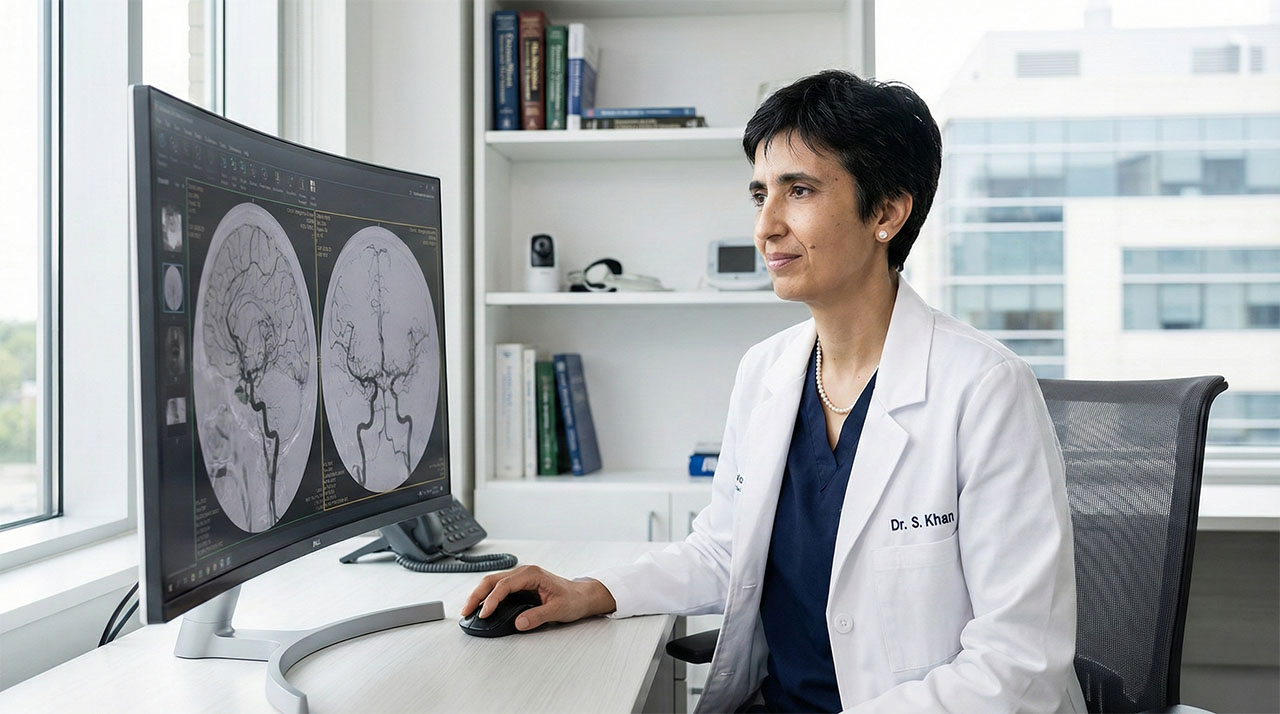

While being evaluated for symptoms concerning for stroke, Jeanette received news no one expects to hear. Imaging revealed not one, but four brain aneurysms. Two of them were large.
An aneurysm is a weakened area in the wall of a blood vessel in the brain. If it ruptures, it can cause bleeding in the brain, known as a hemorrhagic stroke. The consequences can be life-threatening or permanently disabling. Hearing this diagnosis is often overwhelming.
For Jeanette, the emotional weight of the discovery was immediate. The uncertainty. The risk. The fear of rupture. The possibility of sudden, irreversible harm.
But diagnosis is also an opportunity. When aneurysms are discovered before rupture, careful planning and treatment can prevent devastating outcomes.
A Minimally Invasive Treatment Approach
After a detailed evaluation of the size, shape, and location of each aneurysm, a treatment plan was developed.
Dr Khan treated the aneurysms using a minimally invasive endovascular approach. This technique allows access to the brain’s blood vessels through the arteries, without open brain surgery.
In Jeanette’s case:
• No large surgical incision was required
• She did not need general anesthesia
• She remained in the hospital overnight for observation
The procedure was designed to secure the aneurysms and significantly reduce the risk of rupture.
Follow-Up and Long-Term Outcome
Several months later, follow-up angiography was performed to evaluate the treated vessels.
The imaging showed complete resolution of the aneurysms. It appeared as though they had never been there.
That was more than five years ago.
Today, Jeanette moves through her life without the burden of worrying about aneurysm rupture. The diagnosis that once caused fear is now a distant memory.
What This Means for Patients
Why Early Detection Matters
Jeanette’s story highlights the critical importance of early aneurysm detection. When discovered before rupture, treatment options are more varied and outcomes significantly better. Ruptured aneurysms require emergency intervention and carry higher risks of complications, permanent disability, or death.
Regular neurological screening, especially for patients with risk factors like family history, hypertension, or previous aneurysms, can be life-saving. At our Flint neurosurgery practice, we emphasize the value of proactive care and thorough evaluation when aneurysms are suspected or discovered.
Brain aneurysms are often discovered incidentally during imaging performed for other reasons. Not all aneurysms require immediate treatment. Some can be monitored. Others benefit from early intervention.
The key factors include:
• Size and location
• Patient age and overall health
• Vascular anatomy
• Individual rupture risk
When treated appropriately, outcomes can be excellent.
Jeanette’s story reflects the importance of early diagnosis, thoughtful decision-making, and minimally invasive options when appropriate.
Common Questions
Clear answers to help you understand what aneurysm evaluation and treatment can involve.
Can multiple brain aneurysms be treated at the same time?
In many cases, multiple aneurysms can be treated during the same procedure, depending on their location, size, and vascular anatomy. Your surgeon will recommend an approach based on safety and overall risk.
Is surgery always required for a brain aneurysm?
No. Some aneurysms are best managed with imaging surveillance rather than immediate treatment. The decision depends on factors like size, location, symptoms, and estimated rupture risk.
What does minimally invasive aneurysm treatment mean?
Minimally invasive (endovascular) treatment reaches the aneurysm through the blood vessels, rather than open brain surgery. The best option depends on aneurysm anatomy and your individual clinical situation.
Concerned About a Brain Aneurysm Diagnosis in Flint, MI?
If you’ve been told you have a brain aneurysm, or you’re unsure about your treatment options, a specialist consultation can provide clarity and a clear next step.